

Last Updated: November 1, 2026
Quick Summary
Yes, budget guitar pedals are worth buying in 2026 when you pick one that does one job well. Our top beginner choice is the Boss SD-1 Super Overdrive, priced at $69.99, with a single tone control that keeps the learning curve short.
- Start with one pedal that does one job well, then add a second once you know your sound.
- The Boss SD-1 Super Overdrive is our first-purchase pick at $69.99, with a single tone control.
- Match your pedal to your playing: overdrive for clean warmth, distortion for rhythm, fuzz for sustain.
- Add up each pedal's current draw and buy a supply with headroom, since daisy-chain supplies can cause hum.
Table of Contents
- Best Budget Guitar Pedals for Beginners
- Affordable Overdrive Pedals Under $80
- Distortion, Fuzz, and Phaser Picks at Budget Prices
- Chorus, Delay, and Tremolo Options That Punch Above Their Price
- Budget Reverb and Multi-Effects Pedals to Consider
- Power, Pedalboard Setup, and Buying Your First Pedal
- Frequently Asked Questions
Budget guitar pedals have a reputation problem. Players assume that anything under $100 will sound thin, break after a few gigs, or fall apart on a pedalboard. Some of that reputation is earned. A lot of it is not. The pedals in this guide are the ones from our own catalog at Specialty Traders, and our job here is to help you decide which ones are worth your money in 2026.
We selected the list from seven effect types: overdrive, distortion, fuzz, chorus, phaser, delay, and tremolo. Each pick is a current product we carry, priced at or below the range most beginners and working players tend to budget for a single stompbox. We looked at what each pedal is designed to do, how it sits in a signal chain, and whether its price matches what it delivers. We did not run controlled listening tests across the set, so treat the sound notes below as descriptions of design intent rather than measured results.
Every price here is in USD and reflects the listing at the time of writing. Prices change, so confirm the current figure before you buy.
Best Budget Guitar Pedals for Beginners
If you are new to effects, start with one pedal that does one job well. Our pick for a first purchase is the Boss SD-1 Super Overdrive, listed at $69.99. It is designed to produce a warm, natural drive that responds to how hard you pick, which makes it a useful way to learn how gain and dynamics interact. Its single tone control keeps the learning curve short.
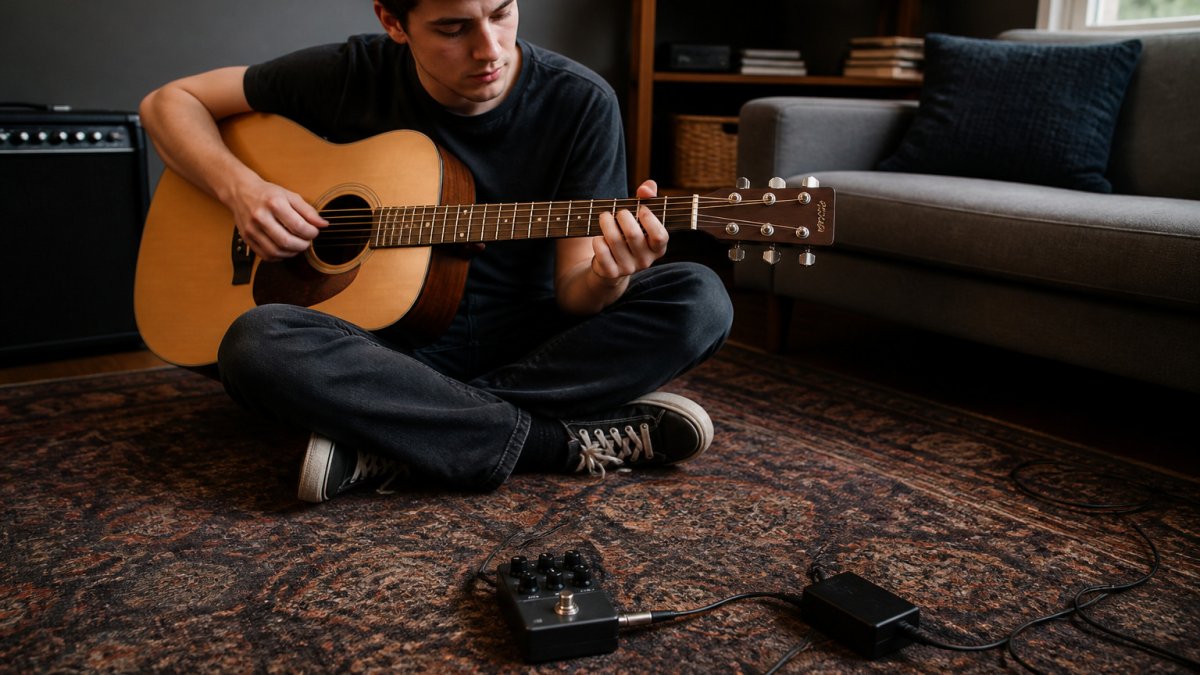
A compact drive like this works as a foundation. Once you know what you like, you can add a second pedal and start building a small board.
Affordable Overdrive Pedals Under $80
Overdrive is the most common starting point, and two of our picks sit comfortably under $80. The Electro-Harmonix Hot Tubes Nano Overdrive lists at $79.80. You can view the Yellowcake Fried Gold Overdrive Effects Fx Pedal for electric guitar as another affordable overdrive option. It is a CMOS overdrive that reacts to your touch and to your guitar's volume knob, so clean playing and gritty playing both come from the same pedal. A tone bypass switch removes the tone circuit entirely if you want a more open sound.
The Boss SD-1, mentioned above, is the more subdued option in this group. You can also browse the One Control BJF Strawberry Red overdrive guitar effect pedal for another low-cost overdrive to compare. If you play blues or classic rock and want a smooth drive rather than heavy gain, it fits well. If you want a more aggressive sound, the Hot Tubes gives you more range.
Watch out: overdrive pedals interact with your amp. A pedal that sounds bright through one amp can sound harsh through another, so try to listen before committing when you can.
Distortion, Fuzz, and Phaser Picks at Budget Prices
Distortion is where budget pedals often get a bad name, but the classics hold up. The Boss DS-1 Distortion, at $69.99, has been in production since 1978 and remains the best-selling compact pedal Boss has made. For another classic distortion option, you can view the Electro-Harmonix Little Big Muff Pi classic distortion pedal.

For fuzz, the Electro-Harmonix Little Big Muff Pi lists at $83.50. If you are looking for budget fuzz tones, you can also check out the BBE Windowpane silicon fuzz effects pedal. It is a compact version of the Big Muff circuit, aimed at players who want sustain and a thick, violin-like tone. It is a sound that is either exactly what you want or not at all, so listen to a clip before buying.
For phasing, the Electro-Harmonix Small Stone lists at $83.50. It offers a variable rate control and a color switch that changes the character of the sweep. It is a useful option for players who want motion without the price of a larger modulation unit.
Chorus, Delay, and Tremolo Options That Punch Above Their Price
Modulation and time-based effects are where a small budget goes furthest. The Electro-Harmonix Small Clone, priced at $107.00, is the original analog chorus that many players still reference. Its Depth control ranges from subtle thickening to pronounced warble. If you want the same circuit in a smaller footprint, the Neo Clone lists at $86.20 and is built on the same classic design.
For delay, the Electro-Harmonix Slap-Back Echo lists at $81.00. It offers three delay times, 45ms, 65ms, and 100ms, plus up to 20dB of boost. It is a single-repeat style of delay, which suits rockabilly, country, and any part that needs doubling without a long trail.
Tremolo is covered by the Boss TR-2, at $119.99. It is the most expensive pedal in this section, but it adds Wave, Rate, and Depth controls that let you move from smooth vintage tremolo to harder square-wave pulses. Boss's five-year warranty applies.
Budget Reverb and Multi-Effects Pedals to Consider
Reverb is the category where budget shoppers most often get burned, because cheap reverb algorithms can sound metallic or unnaturally bright. That does not mean you have to skip it. It means you should know what you are buying and set expectations by use case.
What budget reverb actually gets you. At the entry level, most reverb pedals fall into three families: spring emulations (aimed at surf, country, and roots players), plate and hall emulations (aimed at ambient and worship players), and simple room/ambience circuits. Spring is the hardest to fake cheaply, so a budget spring setting often sounds splashy rather than drippy. Plate and hall are easier to approximate, which is why many affordable units lead with those modes. If you mainly need a little space behind a clean amp, a basic room or plate setting is usually enough.
Boss DS-1 Distortion Guitar Effect Pedal →
How to audition a budget reverb before you commit. Play a short, clean chord and let it ring. Listen for three things: whether the tail decays smoothly or cuts off abruptly, whether the high end turns brittle as the tail fades, and whether the pedal adds noise when the mix knob is low.
Multi-effects as a budget shortcut. A multi-effects unit bundles several effect types into one box, which can be the cheapest way to cover modulation, delay, and reverb at once. The trade-off is menu diving, shared power draw, and the fact that one failure takes every effect with it.
A practical buying order. If reverb is your priority, buy a dedicated reverb first and treat multi-effects as a later expansion.
We do not currently list a dedicated budget reverb or multi-effects unit in this catalog, so the guidance above is designed to help you evaluate options from any source against the same criteria we use for the pedals we carry. When you choose one, check its power requirements and footprint against your board before you buy.
Power, Pedalboard Setup, and Buying Your First Pedal
Power is the detail most beginners get wrong, and it is also where a little planning saves the most money.
Know your current draw before you buy a supply. Every pedal lists a current draw in milliamps, usually in the manual or on the manufacturer's spec page.
Match polarity and voltage exactly. The standard for most pedals is 9-volt DC, center-negative. Some pedals, particularly certain fuzz and vintage-style circuits, use center-positive wiring, and a few require 12 or 18 volts. Connecting the wrong polarity or voltage can destroy a pedal instantly.
Plan the signal chain before you buy pedals two and three. A common order is tuner first, then dynamics or filters, then drive and fuzz, then modulation, then delay, then reverb last. That order is a starting point, not a rule. Fuzz in particular often sounds best first in the chain, before any buffered pedal, because many fuzz circuits expect to see the guitar's pickup load directly.
Budget tiers for a starter board. Think in tiers rather than in single purchases. A first-tier board is one pedal and a battery or a single isolated output.
Buying used without getting burned. The used market stretches a limited budget further, but check three things before you pay: whether the pedal powers on and passes signal, whether the footswitch and jacks are solid, and whether the seller accepts returns. Ask for a photo of the serial number and confirm the model revision, since budget pedals are sometimes revised silently. Avoid listings that show a pedal with a missing battery door or a replaced knob, because those often signal rougher handling. If you buy used, test it the day it arrives and keep the packaging until you are sure.
A simple first-pedal decision path. Pick the effect you use most in your current playing, not the one you think sounds coolest. If you play clean and want warmth, start with an overdrive. If you play rhythm and want aggression, start with a distortion.
Specialty Traders ships orders the following business day, and every instrument and pedal we sell is inspected before it leaves our shop. If a pedal is not what you expected, check our return terms at checkout before you buy.
Power and signal chain are where most beginners run into trouble, so the key checks are summarised below.
| Check | What to confirm | Why it matters |
|---|---|---|
| Current draw | Total mA for all pedals | Supply must cover the total with headroom |
| Polarity and voltage | 9V center-negative (usually) | Wrong polarity can destroy a pedal |
| Daisy-chain supplies | Avoid them | Can cause hum or too little current |
| Signal chain order | Tuner, drive, modulation, delay, reverb | Fuzz often sounds best first |
| Typical analog draw | Roughly 10-50mA | Analog pedals need little current |
| Digital draw | Often several hundred mA | Delay, reverb and multi-effects need more power |
Frequently Asked Questions
What are the best budget-friendly guitar pedals in 2026?
Among the pedals in this roundup, the Boss SD-1 Super Overdrive at $69.99 and the Electro-Harmonix Small Clone chorus at $107.00 are strong starting points. The Boss DS-1 Distortion at $69.99 is the classic choice for hard-edged gain. Choose by the sound you need most first, then compare prices. Every model here carries a current USD price and a listed build, so check the product page before you buy.
What guitar pedal should a beginner buy first?
Most beginners do well starting with one overdrive pedal, since it changes tone in a way that is easy to hear and works with almost any guitar and amp. The Boss BD-2 Blues Driver at $109.99 is a dependable option for warm, responsive drive. If you mainly play clean and want texture, a chorus such as the Electro-Harmonix Neo Clone at $86.20 is a good second pick. Add pedals one at a time as your playing needs become clear.
Are cheap guitar pedals worth buying?
Yes, when you pick a model with a proven circuit and a clear purpose. Many of the pedals in this guide are priced between $69.99 and $119.99 and come with a manufacturer warranty; the Boss models listed include a five-year warranty. Budget pedals do not usually reach the flexibility of high-end boutique units, so set your expectations around core tones rather than every possible sound. Test a pedal with your own guitar and amp before deciding it is not good enough.
How much should I spend on my first guitar pedal?
A reasonable first budget is between about $70 and $110, which covers the core overdrive, distortion, and chorus pedals in this roundup. Spending more rarely helps a beginner who has not yet decided which effects they use. Remember to budget for a suitable power supply as well, since the product listings recommend using a proper supply rather than a daisy chain that may not deliver enough power.
