

Table of Contents
- What to Expect When Buying Inspected Used Electric Guitars Online
- Used Guitar Inspection Checklist: What Professionals Verify
- Questions to Ask When Buying a Used Guitar
- Used Guitar Price Guide: Understanding Fair Market Value
- Understanding Used Guitar Return Policies
- Professional Setup and Playability: What You Get Out of the Box
- Safe Online Purchasing Practices for Used Instruments
- Frequently Asked Questions
Last Updated: October 9, 2026
What to Expect When Buying Inspected Used Electric Guitars Online
When you buy inspected used electric guitars online, you're getting an instrument that has been vetted by professionals before it ships to your door. At Specialty Traders, we understand that purchasing used gear sight-unseen creates legitimate concerns.

The inspection process isn't just a quick once-over. Every used guitar that passes through our hands gets examined for playability, hardware integrity, electronics function, and cosmetic condition.
Understanding what "inspected" actually means separates confidence from disappointment. Many online sellers use the term loosely. Some mean they plugged it in and listened. We mean we've spent time with your instrument, tested every function, made adjustments where needed, and documented the condition honestly.
The used guitar market has shifted dramatically over the past few years. Quality pre-owned instruments are now easier to find than ever, but that also means more sellers claiming inspection without delivering it.
Used Guitar Inspection Checklist: What Professionals Verify
A professional inspection covers specific, measurable points that directly affect whether a guitar is playable and worth the price. Here's what we evaluate on every instrument:
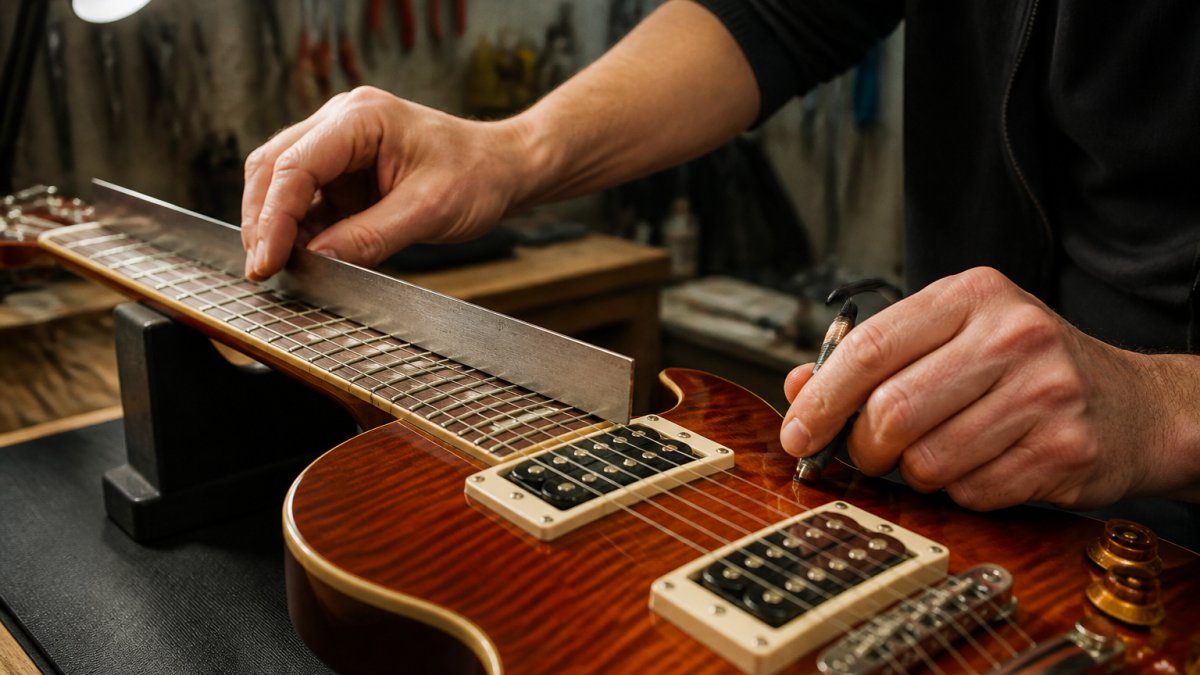
Playability and Setup Standards
Playability is the foundation of every inspection. A guitar can look pristine and still be unplayable if the setup is wrong. We check action height at the first and last frets, verify that the neck relief is appropriate for the instrument's scale length, and confirm that intonation is accurate across the fretboard.
Fret wear is one of the most telling signs of a guitar's history. Light fret wear is normal on any played instrument. Deep divots or flat spots mean the guitar may need a re-fret, which is expensive. We document exactly what we find and price accordingly.
The truss rod must operate smoothly and actually adjust the neck. A seized truss rod is a deal-breaker on most guitars. We test it gently and document its condition. Bridge stability matters too. On bolt-on neck guitars, we verify that the neck pocket is tight.
Hardware, Electronics, and Hardware Integrity
Every switch, potentiometer, and jack gets tested. A scratchy potentiometer or noisy switch might seem minor, but it's expensive to replace and affects playability during performance. We turn every knob, flip every switch, and listen for clean response with no crackling or cutting out.
The pickups must produce signal consistently. We test both the bridge and neck pickup, check for any hum that shouldn't be there, and verify that coil-splitting switches (if equipped) actually work. Electronics issues can range from simple (a loose solder joint) to complex (a failed potentiometer), and we identify them before the guitar ships.
Hardware integrity includes checking that tuners hold pitch, the bridge is secure and level, and the tailpiece (if separate) is stable. Missing or corroded hardware gets noted and typically replaced before shipping. The nut, whether original or replacement, must be secure and properly slotted.
| Inspection Point | What We Check | Why It Matters |
|---|---|---|
| Fret condition | Wear depth, flat spots, divots | Determines playability and re-fret cost |
| Neck relief | Straightness with truss rod adjusted | Affects action and intonation |
| Action height | Distance from strings to frets | Direct impact on playability |
| Pickups | Signal strength, hum, coil-split function | Critical for tone and performance |
| Potentiometers | Smooth operation, no crackling | Affects volume and tone control |
| Switches | Clean engagement, no cutting out | Essential for pickup selection |
| Bridge | Stability, levelness, secure mounting | Affects intonation and sustain |
| Tuners | Smooth operation, pitch stability | Required for staying in tune |
Questions to Ask When Buying a Used Guitar
Before you commit to a purchase, ask the seller specific questions that go beyond the standard listing description. Generic answers tell you they haven't actually inspected the instrument. Specific answers indicate real evaluation.
Ask about fret condition directly: "What's the fret wear like?" A vague response like "it plays great" isn't helpful. You need to know if the frets are in excellent condition, show light wear, or have noticeable divots.
Question the electronics specifically: "Do all the switches work cleanly?" and "Are there any scratches or pops from the potentiometers?" If the seller hasn't tested these, that's a red flag.
Inquire about the bridge and hardware. "Is the bridge original, and is it stable?" For vintage guitars, this matters enormously.
Finally, ask about the return policy explicitly. "If the guitar doesn't match the description, what's your process for returns?" A seller confident in their inspection will have a clear, customer-friendly policy.
Used Guitar Price Guide: Understanding Fair Market Value
Price reflects condition, rarity, brand reputation, and market demand. Two guitars of the same model can have dramatically different values based on their actual state.
Condition Grading and Its Impact on Price
The standard grading system runs from Mint to Poor, and each grade has a specific price impact. Mint condition, played minimally, no wear, original case, commands full retail or near-retail pricing. Near Mint adds 10-20% discount because of light play wear. Excellent condition (light wear, fully functional, minor cosmetic marks) typically runs 20-35% below retail.
Good condition guitars (moderate wear, fully playable, some cosmetic issues) sit at 35-50% of retail. Fair condition (heavy wear, playable but may need setup or minor repairs) drops to 50-65% of retail. Poor condition (significant issues, may need repair) can be 65-80% below retail, depending on whether the problems are cosmetic or functional.
At Specialty Traders, we price based on actual condition, not wishful thinking. A guitar with noticeable fret wear, minor finish checking, and solid hardware might be graded as Excellent and priced accordingly.
Vintage vs. Modern Used Gear Pricing
Vintage instruments, typically defined as pre-1980s, often command premiums beyond their condition grade because of tonewood quality, historical significance, and rarity. A 1960s Fender Jazzmaster in Good condition might sell for more than a modern equivalent in Mint condition, because vintage Jazzmasters are desirable and increasingly scarce.
Modern used guitars (post-2000) typically depreciate 20-40% from retail in the first few years, then stabilize. A five-year-old guitar from a respected brand in Excellent condition usually sits at 40-50% of its original retail price. Boutique and custom shop instruments hold value better than mass-market options, sometimes depreciating only 25-35%.
The used market for modern gear is more predictable because comparable retail prices are easy to verify. Vintage pricing requires more expertise, you need to know which models are appreciating, which are stable, and which are declining. That's where professional evaluation becomes crucial.
ESP LTD EC-1000 Vintage Black Guitar EC1000VBD #1479 Used →
Understanding Used Guitar Return Policies
A strong return policy is your safety net when buying used instruments online. It tells you the seller stands behind their inspection and condition assessment.
Many reputable sellers offer 14-30 day return windows with full refunds if the guitar doesn't match the description. Some charge return shipping; others cover it.
The policy should specify what qualifies for return. "Doesn't match the description" is clear. "Buyer's remorse" typically isn't covered. If you ordered a guitar expecting it to be Excellent condition and it arrives in Good condition with undisclosed fret wear, that's a valid return.
Ask about warranty coverage on repairs. Some sellers offer 30-90 day warranties on electronics and hardware, covering failures that occur shortly after purchase. This protects you from latent defects, problems that existed but weren't apparent during the initial inspection.
Professional Setup and Playability: What You Get Out of the Box
When you receive a guitar that's been professionally set up, it should be playable immediately. That means the action is comfortable, the intonation is accurate, and all functions work smoothly.
Professional setup includes action adjustment (filing the nut and bridge if necessary), truss rod adjustment for proper neck relief, intonation verification and bridge saddle adjustment, and electronics testing with cleaning if needed. A properly set-up guitar stays in tune, plays comfortably, and sounds its best.
The difference between a "playable" guitar and a professionally set-up guitar is significant. A playable guitar works. A set-up guitar feels right in your hands and responds the way you expect.
Setup standards vary by player preference. A blues player might prefer higher action for bending; a classical player might prefer lower action for speed.
Safe Online Purchasing Practices for Used Instruments
Buying used gear online requires more caution than buying new, but following specific practices dramatically reduces risk.
Start by verifying the seller's reputation. Check reviews on multiple platforms, not just their own site. Look for patterns in feedback, consistent praise for condition accuracy and shipping care is a strong signal. Consistent complaints about condition mismatches or slow shipping are red flags.
Request detailed photos from multiple angles, including close-ups of the fretboard, headstock, and any areas showing wear. Ask for photos under bright lighting so you can actually see the condition. Generic product photos aren't sufficient for used gear, you need to see this specific instrument.
Ask about cosmetic condition explicitly. Finish checking (fine cracks in the finish), dings, scratches, and wear marks should all be disclosed. A seller who mentions minor cosmetic issues is being honest. A seller who claims a 20-year-old guitar is "pristine" probably hasn't looked closely.
Authentication and Serial Number Verification
For vintage or high-end guitars, authentication matters. Counterfeit instruments exist, particularly for desirable models. Ask the seller for the serial number and verify it matches the brand's records if the manufacturer publishes them.
Many brands (Fender, Gibson, PRS) maintain databases where you can cross-reference serial numbers with production year and specifications. This confirms the guitar is genuine and tells you when it was made. For vintage gear, this verification is essential.
Request clear photos of the serial number location (usually on the headstock or neck plate) and any other identifying marks. Legitimate sellers expect this question and answer it readily.
Shipping Insurance and Logistics for Fragile Instruments
Guitars are fragile. Proper shipping requires specific packaging that protects against impact, temperature swings, and humidity changes. Ask how the seller packages guitars. Hard cases are standard; soft gig bags are risky for shipping.
Verify that the shipment is insured for the full purchase price. Guitar insurance isn't expensive, usually 2-4% of value, but it's essential. If the guitar arrives damaged, insurance covers replacement or repair. Without it, you're absorbing the loss.
Track your shipment and photograph the package condition when it arrives. If there's visible damage, document it before opening. This protects your insurance claim if the guitar sustained damage in transit.
Specialty Traders includes shipping insurance on all instruments and uses professional packaging designed specifically for guitars. Proper logistics are non-negotiable.
Buying used electric guitars online doesn't have to be risky when you work with sellers who take inspection seriously.

Frequently Asked Questions
What should I check before buying a used electric guitar online?
Inspect the fretboard for fret wear and crown, check hardware for corrosion or damage, verify electronics respond cleanly without switch noise, examine the finish for checking or cracks, and confirm the neck is straight using the truss rod adjustment. Request detailed photos of the headstock, tuners, bridge, pickups, and any cosmetic blemishes. Ask the seller about setup history and whether the instrument has been professionally inspected before shipping.
How do I know if a used guitar inspection is thorough?
A professional inspection covers playability (action, intonation, fret condition), electronics testing (pickups, potentiometers, switches), hardware integrity (bridge stability, tuners, nut slot condition), and cosmetic assessment. Specialty Traders inspects every instrument and sets it up for proper functionality before shipping. Ask sellers specifically what their inspection process includes and whether they test electronics, check fret wear, and verify intonation before the guitar ships to you.
What's a fair price for a used electric guitar?
Used guitar pricing depends on brand, model, condition, and age. Entry-level used guitars typically range $150-$400, mid-range instruments $400-$1,000, and professional-grade or vintage models $1,000+. Condition grading (mint, excellent, good, fair) significantly affects value. Vintage models often command premiums despite wear. Compare listings across multiple retailers, check serial numbers against manufacturer databases, and factor in setup quality and return policies when evaluating price. Specialty Traders offers inspected used guitars from $199 to $1,499, all with professional setup included.
What should a used guitar return policy cover?
Look for policies that allow returns within 14-30 days if the condition description doesn't match the guitar received, if playability issues emerge, or if electronics fail. The policy should specify who pays return shipping, whether refunds or exchanges are offered, and if there's a restocking fee. Verify the policy covers fretwork problems, electronics issues, and setup concerns that arise after arrival, not just visible damage present in photos.