

Table of Contents
- Start With a Realistic Budget
- Acoustic Guitar Body Shapes Explained
- Solid Top vs. Laminate Acoustic Guitar
- Steel String, Nylon String, or Acoustic-Electric?
- Playability: Neck Profile, Action, and Nut Width
- New vs. Used: What Makes Sense for a First Guitar
- Essential Acoustic Guitar Accessories for Beginners
- Hidden Costs and Long-Term Maintenance
- Frequently Asked Questions
Last Updated: September 23, 2026
Start With a Realistic Budget
Learning how to choose your first acoustic guitar starts with one honest number: what you can spend without resenting it later. Too many beginners buy the cheapest instrument they can find, then quit six weeks in because the guitar fights back.
Set a budget that covers a playable instrument plus the essentials:
- Instrument: the largest share of your total budget
- Setup and strings: reserve a small amount for a professional once-over
- Accessories: tuner, capo, case, and picks
- Contingency: a buffer for repairs or a second set of strings
Stretching slightly on the guitar itself pays off more than buying premium accessories first. A well-built, properly set up instrument is easier to play, and easier guitars get practiced more.
Acoustic Guitar Body Shapes Explained
Body shape decides whether you actually enjoy holding the guitar. It drives three things at once: how much air the soundbox moves (volume and bass), where the instrument balances against your body, and how far your fretting hand has to reach. Two guitars with identical tonewoods can feel completely different depending on shape.
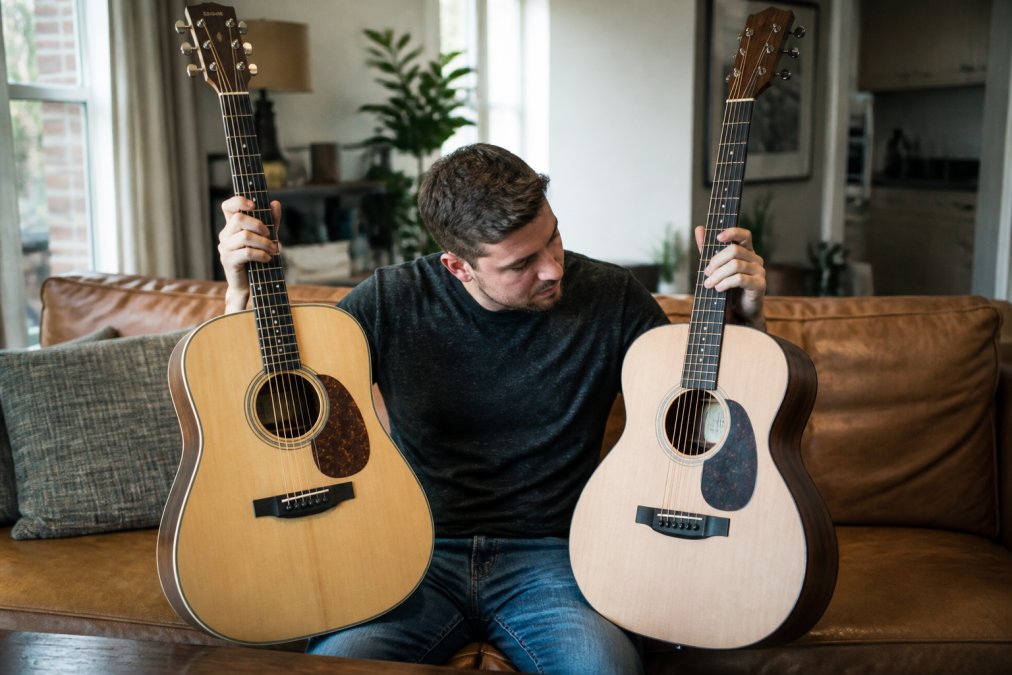
Bigger bodies push more low end and project further, but they sit lower on your thigh and push your strumming arm into a wider reach. Smaller bodies trade volume for a shorter reach and a lighter feel on the shoulder. The right one is the one you'll pick up every day.
Dreadnought vs. Concert vs. Grand Auditorium
| Body Shape | Typical Lower-Bout Width | Typical Body Depth | Best For | Tone Character |
|---|---|---|---|---|
| Dreadnought | ~15.5-16 in | ~4.5-5 in | Strumming, flatpicking, projection | Bold bass, loud, scooped mids |
| Concert / 000 | ~14.5-15 in | ~4-4.25 in | Fingerstyle, smaller players | Balanced, focused, tight bass |
| Grand Auditorium | ~15-16 in | ~4.25-4.5 in | All-round playing, singer-songwriters | Even, versatile, controlled |
| Parlor | ~13-14 in | ~3.75-4.25 in | Couch playing, travel, small frames | Mid-forward, intimate |
| Jumbo | ~16.5-17 in | ~4.75-5 in | Big strumming, stage work | Huge low end, high headroom |
Those widths matter more than the marketing name. A "concert" from one builder can be nearly as wide as another builder's "grand auditorium," so always check the lower-bout width and body depth, not just the label.
Match the Shape to Your Body, Not Just Your Genre
This is the part most guides skip, and it's why a lot of first guitars end up in a closet. A few rules of thumb:
- Under about 5'4" or with a shorter torso: a concert, 000, or parlor lets your strumming arm relax instead of reaching. A full dreadnought can force your shoulder forward and your wrist to flatten, a fast route to tension and soreness.
- Long arms and a larger frame: a dreadnought or jumbo often feels more natural because the body sits where your arm already wants to fall.
- Seated players: body depth matters as much as width. A deep jumbo can press into your thigh and tilt the neck away; a shallower grand auditorium or concert keeps the neck angle friendlier.
- Standing players: check the balance point. A heavy dreadnought on a strap can neck-dive or pull on your shoulder over a long set; a lighter concert tends to hang more neutrally.
- Players managing shoulder, wrist, or back issues: shorter scale lengths (around 24.75 in vs. 25.5 in) plus a smaller body reduce reach and string tension at once, often the biggest comfort upgrade available.
If you test one thing in a store, sit down, put the guitar on your right leg (or left, if you play left-handed), and see whether your fretting hand reaches the first fret without your elbow flaring out. If it can't, the shape is wrong regardless of how it sounds.
Solid Top vs. Laminate Acoustic Guitar
A solid top is a soundboard cut from a single piece of wood; a laminate top is layered wood pressed together. Solid tops resonate more freely and improve in tone as they age. Laminates resist humidity swings better and cost less.
Steel String, Nylon String, or Acoustic-Electric?
This choice comes down to three physical realities: string tension, neck width, and whether you'll ever plug in. Get those right and the genre question mostly answers itself.
Steel String Guitars
Steel strings are what most people picture when they hear "acoustic guitar." They're louder and brighter than nylon, and standard for pop, rock, country, bluegrass, and most singer-songwriter work.
Nylon String Guitars
Nylon strings (often called classical or Spanish guitars) are gentler on the fingers and produce a warmer, mellower voice. They're the default for classical, flamenco, and much Latin and folk fingerstyle.
Acoustic-Electric Guitars
An acoustic-electric is an acoustic guitar with a pickup system and usually a small preamp with a built-in tuner and EQ. It doesn't change the unplugged sound, it just adds the option to run a cable to an amplifier or PA.
A few pickup types you'll see:
- Piezo undersaddle: the most common; picks up vibration under the saddle. Can sound slightly "quacky" but is reliable and feedback-resistant.
- Soundboard transducer: attached to the top; warmer and more natural, but more prone to feedback at volume.
- Internal microphone: the most acoustic-sounding, but the most feedback-prone and the fussiest to blend.
- Dual-source systems: combine a piezo with a mic or transducer; the most flexible, and usually the most expensive.
Quick Decision Guide
-
Want to strum and sing, play with others, or learn on a familiar feel? Steel string.
-
Want classical technique, softer strings, or have hand sensitivity? Nylon string.
-
Plan to perform, record, or play through a PA within a year? Acoustic-electric.
-
Learning at home with no performance plans? Plain acoustic, and put the savings into a setup.
-
Steel string: pop, rock, country, bluegrass, singer-songwriter
-
Nylon string: classical, flamenco, Latin, folk fingerstyle
-
Acoustic-electric: anything you might plug in live
Playability: Neck Profile, Action, and Nut Width
Playability is the most underrated factor in choosing a first acoustic guitar. A guitar can have beautiful tonewood and still be miserable to play if the action is too high or the neck too thick for your hands.
New vs. Used: What Makes Sense for a First Guitar
A used acoustic guitar often delivers more instrument for your money, provided it has been inspected. Fret wear, a warped neck, or a lifting bridge can turn a bargain into a money pit. New guitars come with warranties and consistent quality control, but you pay for that certainty.
| Factor | New Guitar | Used Guitar |
|---|---|---|
| Price | Higher | Lower |
| Condition risk | Low | Varies |
| Warranty | Usually included | Rarely |
| Value for money | Moderate | Often excellent |
Essential Acoustic Guitar Accessories for Beginners
Essential acoustic guitar accessories for beginners include a tuner, a capo, picks, a case or gig bag, and a spare set of strings. These aren't optional extras; they're part of playing in tune, protecting your instrument, and being ready to practice.
- Tuner: clip-on or app-based
- Capo: spring or screw type
- Picks: a few thicknesses to find your grip
- Case or gig bag: match to your climate
- Strings: one spare set in your preferred gauge
Hidden Costs and Long-Term Maintenance
The sticker price is rarely the full story. Strings, setups, humidification, and occasional repairs add up over the instrument's life. Beginners who plan for them keep their guitars in better shape.
Frequently Asked Questions
Which acoustic guitar is best for a beginner?
A concert or grand auditorium body with a solid spruce top and comfortable neck profile works well for most beginners. These shapes are easier to hold than a full dreadnought, and a solid top improves tone as the wood ages. Look for low action and a setup that makes pressing strings comfortable. Specialty Traders inspects and sets up every instrument before shipping, so your first acoustic guitar arrives ready to play.
How much should a beginner spend on an acoustic guitar?
Set a budget that covers the guitar plus essentials like a tuner, capo, gig bag, and extra strings. Pricing depends on brand, materials, and whether you buy new or used. A solid top model costs more than a laminate, but it sounds better over time. Specialty Traders offers new and used options at competitive prices, and you can check the website for current deals and buyout specials.
What is the difference between a dreadnought and concert body shape?
A dreadnought has a larger body with more volume and bass response, suited to strumming and projection. A concert body is smaller and more comfortable to hold, with balanced tone that works for fingerstyle and lighter playing. Beginners with smaller frames often prefer concert or grand auditorium shapes. Try both if you can, or read body shape descriptions carefully before buying your first acoustic guitar online.
Do I need a professional setup for a new acoustic guitar?
Most new guitars benefit from a setup to adjust action, intonation, and truss rod relief. A proper setup makes the instrument easier to play and helps tuning stability. Specialty Traders performs a thorough inspection and setup on every instrument before shipping, so your guitar arrives playable. If you buy elsewhere, budget for a tech visit or ask about setup services before purchase.