

Table of Contents
- What to Inspect Before Buying a Used Guitar
- How to Check Guitar Neck Straightness
- Evaluating Frets and Fretboard Condition
- How to Test Guitar Electronics
- Inspecting Body, Hardware, and Bridge
- Signs of a Fake Guitar and Authenticity Verification
- Questions to Ask the Seller
- Understanding Condition Grading and Post-Purchase Setup
- Frequently Asked Questions
Last Updated: October 2, 2026
What to Inspect Before Buying a Used Guitar
Buying a used guitar can save you money, but it comes with risk. A instrument that looks good in photos might have hidden problems. The key is knowing what to check before you hand over your cash.
When you verify used guitar condition properly, you avoid expensive repairs later. A guitar with a warped neck or dead frets can cost hundreds to fix. At Specialty Traders, we inspect every used instrument before it ships.
Start by examining the overall appearance. Look for cracks, deep scratches, or finish damage. Take photos under good lighting. Ask the seller for close-ups of any problem areas. Don't rely on one angle of a photo.
Next, focus on the playability. A guitar might look perfect but feel terrible to play. The action (string height) and intonation matter more than cosmetics. We'll cover how to test these in detail below.
Finally, verify authenticity. Counterfeit guitars exist, especially with popular brands. Check the serial number, headstock details, and hardware. Real guitars have consistent construction quality.
How to Check Guitar Neck Straightness
The neck is the most critical part of a guitar. A bent or twisted neck ruins playability and costs serious money to fix. Checking neck straightness takes 30 seconds and reveals major problems.
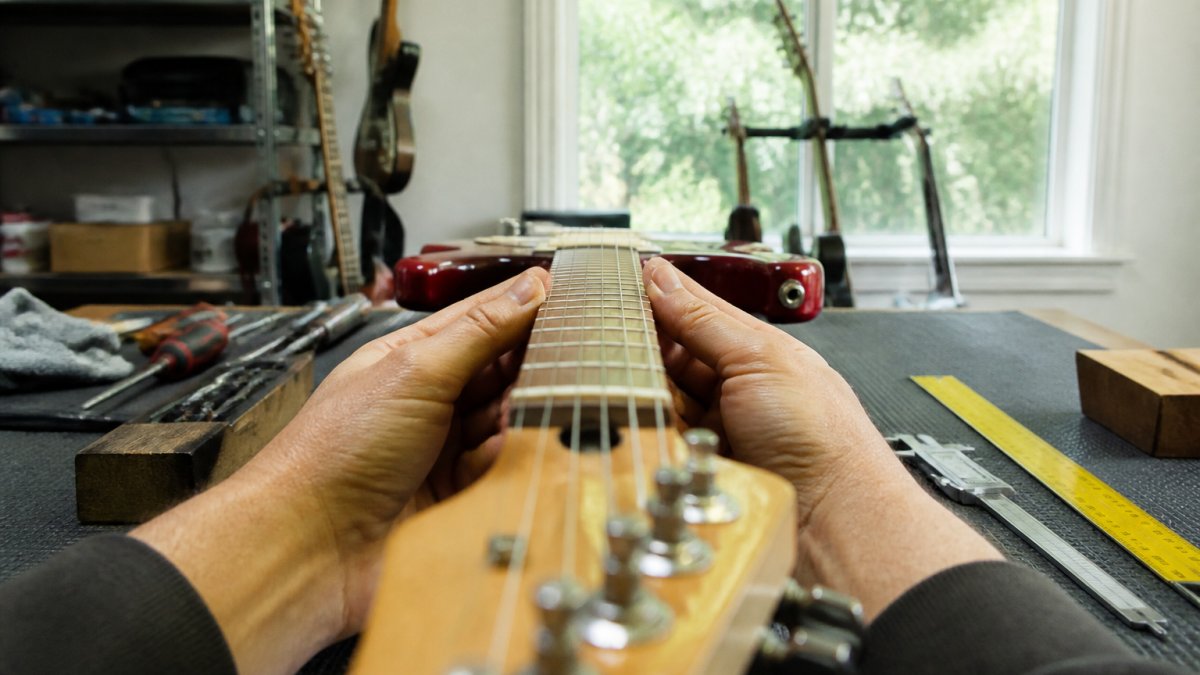
How to sight down the neck:
- Hold the guitar horizontally at eye level
- Look from the headstock toward the body
- Check if the frets form a straight line
- Rotate the guitar and look from the other side
- Sight along the edge of the fretboard too
A perfectly straight neck is rare. Most guitars have slight neck relief (a tiny curve). This is normal and actually helps playability.
Watch for these red flags:
- Excessive forward bow (neck curves toward the strings)
- Backward bow (neck curves away from strings)
- Twists (one side higher than the other)
- Humps or dips in the middle
If you see major issues, walk away.
Understanding Truss Rod Function
The truss rod is a metal rod inside the neck that controls relief. It's your tool for fine-tuning neck straightness. Understanding how it works helps you evaluate condition.
Turn the truss rod clockwise to reduce relief (flatten the neck). Turn it counterclockwise to add relief (increase the curve). One full turn makes a noticeable difference.
A functioning truss rod is essential. If the rod won't turn or feels stuck, that's a problem. Some sellers will mention truss rod issues upfront. Ask directly: "Does the truss rod turn smoothly?"
Don't adjust the truss rod yourself if you're inexperienced. A quarter-turn in the wrong direction can crack the neck. At Specialty Traders, we handle all truss rod adjustments during our quality check process.
Checking for Neck Relief and Action Issues
Action is the distance between strings and frets. High action makes the guitar hard to play. Low action causes fret buzz (strings hitting frets during play).
Measure action at the 12th fret using a ruler or feeler gauge:
- Electric guitars: 1.5 to 2.5 mm on the bass side, 1.25 to 2 mm on the treble side
- Acoustic guitars: 2 to 2.5 mm on the bass side, 1.75 to 2.25 mm on the treble side
If action is way off, the neck likely needs adjustment. That's a setup cost, not a deal-breaker. But know what you're getting into.
Play the guitar if possible. Listen for buzzing. Buzz near the first few frets suggests a forward bow. Buzz higher up suggests a dip in the neck.
Evaluating Frets and Fretboard Condition
Fret wear is normal on used guitars. But excessive wear changes tone and playability. Learn what to look for.
Run your finger along the frets. Feel for flat spots or divots. New frets are crowned (rounded on top). Worn frets are flat. Extreme wear needs a refret.
Look at the fretboard itself. Check for:
- Cracks or splits in the wood
- Separations between frets and the board
- Discoloration or staining
- Deep gouges or dents
Rosewood and ebony fretboards darken with age. That's fine. But cracks are a structural issue.
Play each fret. Press down hard and listen. Dead spots (frets that don't ring out) indicate a neck problem underneath. One or two dead spots might be fixable with a truss rod adjustment. Many dead spots mean the neck is compromised.
Check the first fret especially. It takes the most wear. If the first fret is deeply worn but others are fine, the guitar was played hard but the neck is probably okay.
ESP LTD EC-1000 ET Evertune Dark Brown Sunburst Guitar & Case #0635 Used →
How to Test Guitar Electronics
Electronics fail on used guitars more often than you'd think. A dead output jack or scratchy pots ruins an otherwise good instrument.
Plug in and listen. Connect the guitar to an amp. Strum all strings. You should hear a clear, consistent tone. No crackling. No dropouts.
Move the volume knob slowly from 0 to 10. The volume should change smoothly. Crackling or popping means the potentiometer is dirty or failing.
Test the tone knob the same way. Rotate it slowly. The tone should brighten and darken smoothly.
Flip the pickup selector switch back and forth. Each position should produce a distinct sound. Silence or crackling means a bad switch or wiring issue.
Testing Pickups and Output
Pickups convert string vibration into electrical signal. Bad pickups sound dull or weak. Test each pickup separately.
Select the neck pickup. Play all strings. The tone should be warm but clear. Switch to the bridge pickup. It should sound brighter and more aggressive. This difference is normal.
If both pickups sound identical, or if one is much quieter, that's a red flag.
Checking Potentiometers and Wiring
Potentiometers (pots) control volume and tone. They're cheap to replace but annoying to fix if you don't know how.
Inspecting Body, Hardware, and Bridge
The body is mostly cosmetic, but structural damage is serious. Look for cracks, especially around the neck joint. A crack in the body reduces sustain and can spread.
Signs of a Fake Guitar and Authenticity Verification
Counterfeit guitars are rare but real. Know how to verify authenticity.
Questions to Ask the Seller
Before you commit, ask these questions. Honest sellers answer directly. Evasive answers are a red flag.
Maintenance history:
- Has the guitar been professionally set up?
- When was it last serviced?
- Have any repairs been made? If so, what and when?
Playability:
- Does it stay in tune?
- Are there any dead spots or buzzing?
- Does the truss rod turn smoothly?
Electronics:
- Do all pickups work?
- Do the pots crackle or pop?
- Has anyone modified the wiring?
Authenticity:
- Do you have the original receipt or paperwork?
- What's the serial number?
- Can you provide photos of the serial number location?
Condition:
- Are there any cracks or structural damage?
- Has the guitar been stored in extreme temperatures or humidity?
- Has it been dropped or suffered impact damage?
Price:
- Why are you selling it?
- What's your lowest price?
- Is the price firm or negotiable?
Understanding Condition Grading and Post-Purchase Setup
Used guitars are graded by condition. Understanding these grades helps you know what you're buying.
Poor: Severe damage. Major functional issues. Requires significant repair.
| Inspection Area | What to Check | Red Flags | Cost to Fix |
|---|---|---|---|
| Neck | Straightness, relief, truss rod function | Severe bow, twist, stuck truss rod | $300-$800 |
| Frets | Wear, level, dead spots | Heavy wear, divots, many dead spots | $800-$2,000 (refret) |
| Fretboard | Cracks, separations, finish | Deep cracks, separated frets | $200-$600 |
| Electronics | Pickups, pots, jacks, switches | Crackling, dead pickups, loose jack | $50-$300 |
| Hardware | Tuners, bridge, nut, strap buttons | Loose, missing, or corroded parts | $50-$200 |
| Body | Cracks, finish, structural integrity | Deep cracks, splintering, separations | $200-$1,000+ |
| Authenticity | Serial number, logo, inlays, construction | Mismatched details, sloppy finishing | N/A (don't buy) |
Frequently Asked Questions
How do I know if a used guitar has a warped neck?
Sight down the neck from the headstock toward the body under good lighting. A straight neck should show no visible bowing. Check for neck relief (slight forward curve) by placing a straightedge along the frets. The truss rod controls neck relief, excessive bow or back-bow indicates structural issues. Test playability by checking action at the first and last frets; high action combined with fret buzz suggests neck problems. Acoustic guitars are harder to assess without professional equipment, so ask the seller about any neck issues and inspect the truss rod access.
What should I look for when checking guitar electronics?
Test all pickups by plugging into an amplifier and listening for output on each pickup position. Move the selector switch smoothly, scratchy sounds indicate worn potentiometers. Check the volume and tone controls for smooth operation without crackling. Inspect the output jack for corrosion and test with a cable to ensure solid connection. Look for loose wiring, burn marks, or cold solder joints inside the electronics cavity. On active electronics, verify battery contacts are clean. Dead spots (areas where notes won't sustain) can indicate pickup or wiring issues.
How can I spot a counterfeit or fake guitar?
Verify the serial number against the manufacturer's database if available. Check for consistent logos, fonts, and inlay quality, fakes often have poor printing or misaligned branding. Inspect hardware quality; authentic guitars use branded tuning machines and bridges, not generic parts. Examine the finish closely for inconsistencies in color, spray pattern, or edge work. Research the specific model and year, counterfeiters often copy popular signatures or vintage designs. Ask for provenance documentation and photos of the original packaging. Structural integrity issues like uneven binding or misaligned body seams suggest poor manufacturing.
What's the difference between cosmetic wear and structural damage?
Cosmetic damage includes buckle rash, minor scratches, and finish checking that don't affect playability or structural integrity. These are normal on used instruments and don't impact sound or functionality. Structural damage includes cracks in the body or neck, warped necks, broken truss rods, or failed hardware that compromises playability or durability. Finish issues like deep cracks or separation from the body can lead to moisture damage. Always prioritize playability and structural soundness over cosmetic appearance. A guitar with cosmetic wear but solid structure is a better buy than one with hidden structural problems.