

Last Updated: October 28, 2026
Quick Summary
Buying a used guitar online can be safe if you ask specific questions before paying and buy from a seller who answers them clearly. Request close-up photos and a playing video, check fretwork and electronics, and confirm return terms and shipping costs in writing. Avoid off-platform payment requests.
- Request close-up photos of the frets and a video of the instrument being played.
- Ask the seller to describe the action at the 12th fret and whether the neck has been checked.
- Confirm return policy, who pays return shipping, and whether shipping is free.
- Duties and taxes on international orders are usually non-refundable, so factor them in before checkout.
- Avoid payment requests made off the platform, since they can remove buyer protections.
Table of Contents
- Why Buying a Used Guitar Online Takes More Care Than a Store Visit
- The Best Places to Buy Used Guitars Online
- How to Inspect a Used Guitar Before You Commit
- Questions to Ask When Buying a Used Guitar
- Used Guitar Price Guide: What a Fair Price Looks Like
- Shipping, Returns and Protecting Yourself From Scams
- Choosing Your Next Guitar With Confidence
- Frequently Asked Questions
Why Buying a Used Guitar Online Takes More Care Than a Store Visit
Specialty Traders is a family-owned business with over 25 years in the musical instrument industry. The real risk is not fraud alone. It is a mismatch between a flattering listing and the instrument that arrives at your door.
In a store, you pick the guitar up, sight down the neck, play the first few chords and feel the action under your fingers. Online, you get photos and a description. That gap is one reason a used guitar bought remotely deserves scrutiny.
The fix is not to avoid online purchases. It is to ask better questions before you pay, and to buy from a seller who answers them clearly. Below, we cover how to evaluate sellers, how to inspect a guitar from photos and video, and how to protect yourself after the box arrives.
The Best Places to Buy Used Guitars Online
Choosing where to buy matters as much as choosing which guitar to buy. The right venue depends on what you need. Comparing venues on coverage, fees, shipping, and buyer protection can help you assess them.
The four venue types you will actually encounter
- Specialist instrument retailers with an online storefront. These inspect and describe each instrument before it ships, publish condition grades, and stand behind a return window. Inventory is narrower and prices reflect the inspection work. This is the most consistent option for a player who wants a guitar that arrives playable.
- Peer-to-peer marketplaces. Individual sellers set descriptions and standards, so consistency varies widely. Selection is the deepest, especially for discontinued and vintage models, but you carry more of the inspection burden and must read each seller's history and return terms.
- General resale and consignment platforms. Broad category coverage and frequent turnover, with authentication programs on some higher-value items. Fees and shipping terms differ by category, so confirm them on the specific listing rather than assuming sitewide rules apply.
- Local classifieds and community boards. Best for hands-on inspection and no shipping cost, but reach is limited to driving distance and there is usually no platform-mediated payment protection.
What to compare before you commit to a venue
Run every candidate venue through the same short checklist. The answers, not the brand name, tell you whether the purchase will be convenient.
- Geographic coverage. Does the venue ship to your address, and are there listings in the category you want?
- Fee structure. Buyer fees, seller fees, payment-processing fees, and currency conversion can each change the final price. Ask who absorbs them and whether they appear at checkout or are added later.
- Shipping terms. Confirm whether shipping is free on the item.
- Protection terms. Read the return terms and what the platform does when an item is not as described.
- Condition disclosure. Look for photos of the actual instrument and a stated inspection process.
Signals of a venue worth your money
- Photos of the actual instrument, not stock images
- Condition grades explained in plain language
- A stated return window and who pays return shipping
- Responsive answers to specific questions about fretwork or electronics
- A visible inspection step
At Specialty Traders, every instrument and amplifier goes through a quality check before it ships. Other providers vary, so read their policies closely before you buy.
The four venue types differ in how much inspection and protection they provide, so compare them on the same criteria before you buy.
| Venue type | Best for | Key difference |
|---|---|---|
| Specialist instrument retailers | Players who want a guitar that arrives playable | Each instrument is inspected and graded before shipping |
| Peer-to-peer marketplaces | Discontinued and vintage models | Deepest selection, but you carry more of the inspection burden |
| General resale and consignment platforms | Broad category coverage | Fees and shipping terms differ by category |
| Local classifieds and community boards | Hands-on inspection with no shipping cost | Reach limited to driving distance, usually no payment protection |
How to Inspect a Used Guitar Before You Commit
A thorough inspection starts with the description and continues with every photo and video a seller will share. Ask for close-ups you can compare against the listing, not only the hero shot.
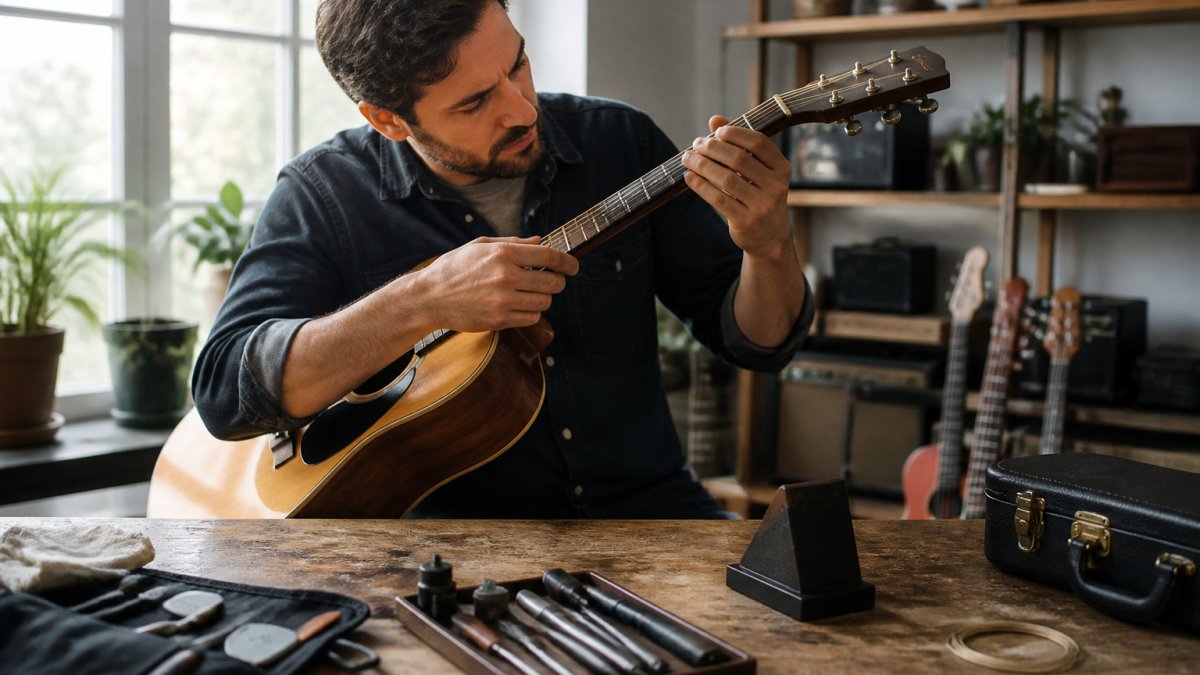
Request close-up details for any instrument you are considering.
Checking Fretwork, Neck Relief and Action
Fretwork is one of the most expensive problems to hide in photos. Ask for a close-up of the frets from the side, looking for uneven wear, grooves worn deep by string bending, or loose and lifting frets at the edges of the board.
Neck relief and action affect playability more than most buyers expect. Ask the seller to describe the action at the 12th fret and whether the neck has been checked for bow. A guitar with a poor setup can be harder to play than a cheaper instrument with a good one.
Spotting Structural and Electronic Issues in Photos
Look for cracks near the neck joint, the bridge and the soundhole, since these are common stress points. Check for previous repairs, uneven finish touch-ups, and warping along the body edges.
For electric guitars, ask for close-ups of the pickups, pots and jack, and request a short video of the instrument being played through an amplifier. Crackling pots or a dead input are much easier to catch on video than in a written description.
Questions to Ask When Buying a Used Guitar
Before you pay, ask the seller questions that force specific answers:
- What does the inspection process include, and what happens if the guitar still has issues on arrival?
- Is the instrument playable out of the box, or will it need a professional setup?
- What is the return policy if the condition does not match the listing?
- Who pays return shipping, and does free shipping apply to this item?
- Is this model in consistent stock, or is it a one-time listing?
Vague answers are a warning sign.
Used Guitar Price Guide: What a Fair Price Looks Like
Used guitar prices depend on model, year, condition, originality of parts, and whether the instrument has been professionally set up. Two guitars that look similar in photos can differ substantially in value once fretwork and electronics are considered.
For current prices on any specific instrument, check the listing on the Specialty Traders website or request a quote directly.
To judge whether a price is fair, compare the instrument against completed sales of the same model in similar condition, and factor in the cost of any setup work you will need. A low price on a guitar that needs significant fretwork can cost more in the end than a higher price on one that plays well.
Shipping, Returns and Protecting Yourself From Scams
Most buyer regret in secondhand instrument shopping happens after checkout, not before. Shipping damage, customs charges, and return-window confusion are the three most common surprises, and each has a concrete way to reduce the risk before you pay.
Domestic shipping: what good packaging looks like
Ask how the instrument will be packed before you buy, and confirm whether the case is included or sold separately.
Specialty Traders offers free US shipping on most items.
Cross-border buying: customs, duties, and delivery time
When a listing ships across a border, the advertised price is rarely the final cost. Import duties, taxes, and carrier brokerage fees are typically assessed at delivery and are the buyer's responsibility unless the seller states otherwise in writing. Before you buy:
- Ask the seller to confirm the declared value and the harmonized tariff code they will use, since the code determines the duty rate.
- Confirm which carrier handles the final leg and whether the carrier collects duties at the door or bills you afterward.
- Expect longer transit times than the domestic estimate, and build in extra days for customs clearance.
- Check whether the seller's return policy applies to international orders at all, many do not, or require the buyer to pay return freight and original duties are not refunded.
Returns: read the window and the freight terms
A return policy is only useful if you understand its terms. Ask the seller to confirm them in writing.
Payment protection and dispute resolution
Protect yourself by keeping records of the listing, photos and communications. Off-platform payment requests, a direct transfer, a payment app, or a request to "settle privately", can remove platform protections.
If something arrives damaged or not as described, document it immediately with photos and contact the seller. Keep the original listing, the photos the seller sent, and every message.
Common scam patterns in secondhand instrument sales
- Off-platform payment requests. The most common pattern; the seller asks to move the transaction off the platform to avoid fees, then disappears.
- Stock photos instead of the actual instrument. Ask for a photo of the serial number or a dated image next to the guitar.
- Pressure to skip inspection. A seller who resists sending additional photos or a short video is telling you something.
- Overly generous terms. Free expedited international shipping on a high-value instrument is a warning sign, not a bargain.
Vague answers, or answers that change when you ask for documentation, are a warning sign.
Choosing Your Next Guitar With Confidence
When buying a used guitar online, inspect the photos and video you can get. Focus on fretwork, neck condition, and electronics.
If you are ready to look at inventory, browse the Specialty Traders online store.
Frequently Asked Questions
What are the best platforms for buying secondhand musical instruments online?
Several marketplaces and specialty retailers sell used guitars and basses. Compare the information available on each listing before you buy. Specialty Traders checks every instrument before shipping. Check each seller's current policies directly before purchasing.
How can I tell if a used guitar is worth the asking price?
Start by comparing recent sold listings for the same model, year, and condition, not just active asking prices. Consider the instrument's condition and features when assessing its value. If a price seems unusual, ask the seller why before assuming it is a bargain.
What should I check before buying a used guitar online?
Ask for close-up photos of the frets, the back of the neck, the headstock, the bridge, and any cracks or repairs. Ask about the setup and whether the electronics work. Ask whether the pickups or hardware have been replaced. Ask the seller about return terms. An inspection note from the seller that describes what was checked can help you understand what was inspected.
Is it safe to buy a used guitar from an online marketplace?
It can be. Ask sellers about their inspection and return terms. Avoid sellers who push you off the platform to pay, and check the seller's feedback history and ask for additional photos if the listing is vague.
