

Last Updated: November 19, 2026
Quick Summary
Affordable professional grade bass guitars start at $749.00 in our current stock, with the used Takamine GB30CE as the lowest-priced option and the Cort Elrick NJS 4 White at $999.00 as our top pick. Every instrument we ship is inspected and set up before it ships.
- The Cort Elrick NJS 4 White at $999.00 is our pick for professional players on a budget.
- The Spector Icon NS-5 at $1,299.99 suits rock and metal stage tone with Aguilar DCB pickups.
- The Ortega STRIPEDSU.ACB has a 32-inch scale, the friendlier option for smaller hands.
- Ask any seller to demonstrate truss rod movement in both directions before you commit.
- A used instrument generally sits one or two tiers above what the same money buys new.
Table of Contents
- What Makes a Bass Guitar Professional Grade
- Quick Comparison: Seven Affordable Professional Bass Guitars
- Best Bass Guitars Under $500 for Working Players
- Affordable Bass Guitars for Gigging: What Holds Up on Stage
- Used Bass Guitars for Sale: Where the Real Value Sits
- The Best Bass Guitar for Professional Players on a Budget
- Setup, Fit, and the Checks to Run Before You Buy
- Shop Inspected Basses at Specialty Traders
- Frequently Asked Questions
What Makes a Bass Guitar Professional Grade
Professional grade is not a price tag. It is a set of construction decisions that survive a hundred gigs without a trip to the repair bench. When we evaluate affordable professional grade bass guitars at Specialty Traders, we look at four things: hardware that holds tune, electronics that stay quiet, a neck that stays straight, and a body that balances on a strap for three hours.
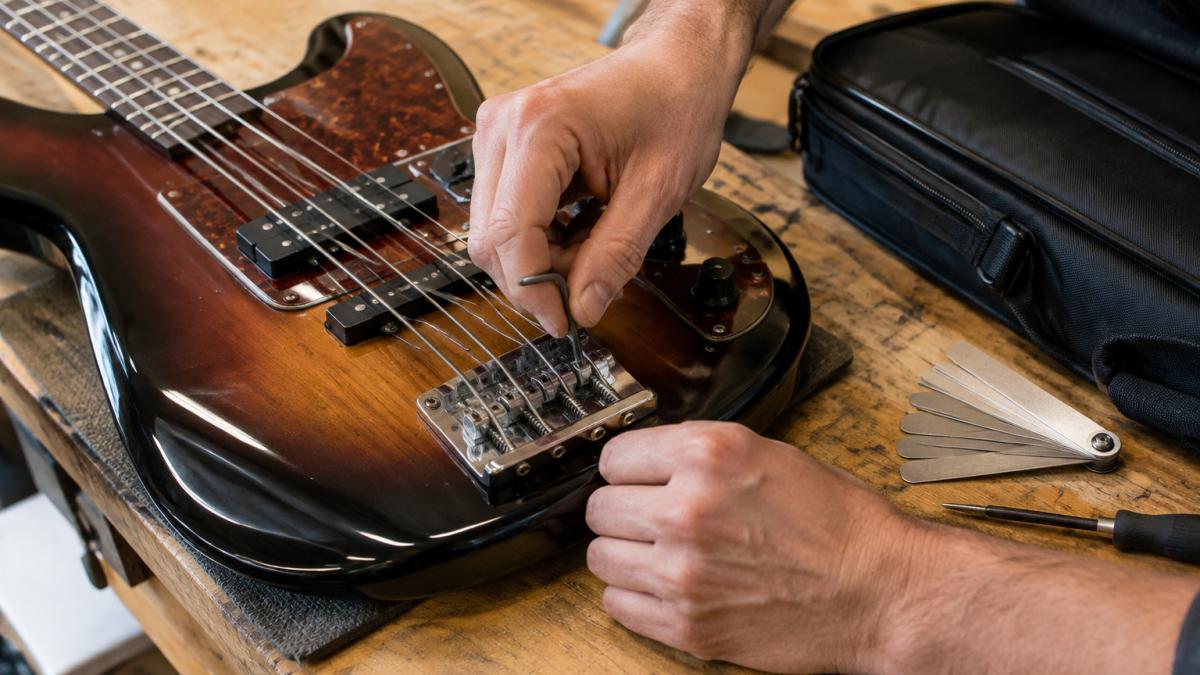
A professional-grade bass holds up under regular performance without constant repair.
The Hardware and Electronics That Actually Matter
Start with the bridge. A high-mass bridge with saddles that lock into deep slots transfers string vibration into the body and holds intonation through temperature swings.
Then the pickups and preamp. Hum-canceling pickups and a preamp with real EQ control give you usable tone at stage volume. The NJS line pairs Voiced Tone VTB-ST pickups with a Bartolini preamp featuring 3-band EQ and active bypass.
Tuners come third. Sealed tuners help hold pitch.
Quick Comparison: Seven Affordable Professional Bass Guitars
Here is the short version. Every instrument below is one we stock, inspect, and set up before it ships.
| Model | Price | Strings | Scale | Best For |
|---|---|---|---|---|
| Cort Elrick NJS 4 White #5138 | $999.00 | 4 | 34" | Working players who want modern J-bass tone |
| Cort Elrick NJS 4 Black #8042 | $999.00 | 4 | 34" | Same build, darker finish |
| Cort Elrick NJS 5 White #2856 | $1,199.00 | 5 | 35" | Five-string gigging |
| Cort Elrick NJS 5 White #5121 | $1,199.00 | 5 | 35" | Five-string, lighter example |
| Takamine GB30CE Used #2531 | $749.00 | 4 | 34" | Acoustic sets and coffeehouse gigs |
| Ortega STRIPEDSU.ACB #1608 | $799.99 | 4 | 32" | Smaller hands, unplugged volume |
| Spector Icon NS-5 #0556 | $1,299.99 | 5 | 35" | Rock and metal stage tone |
Price
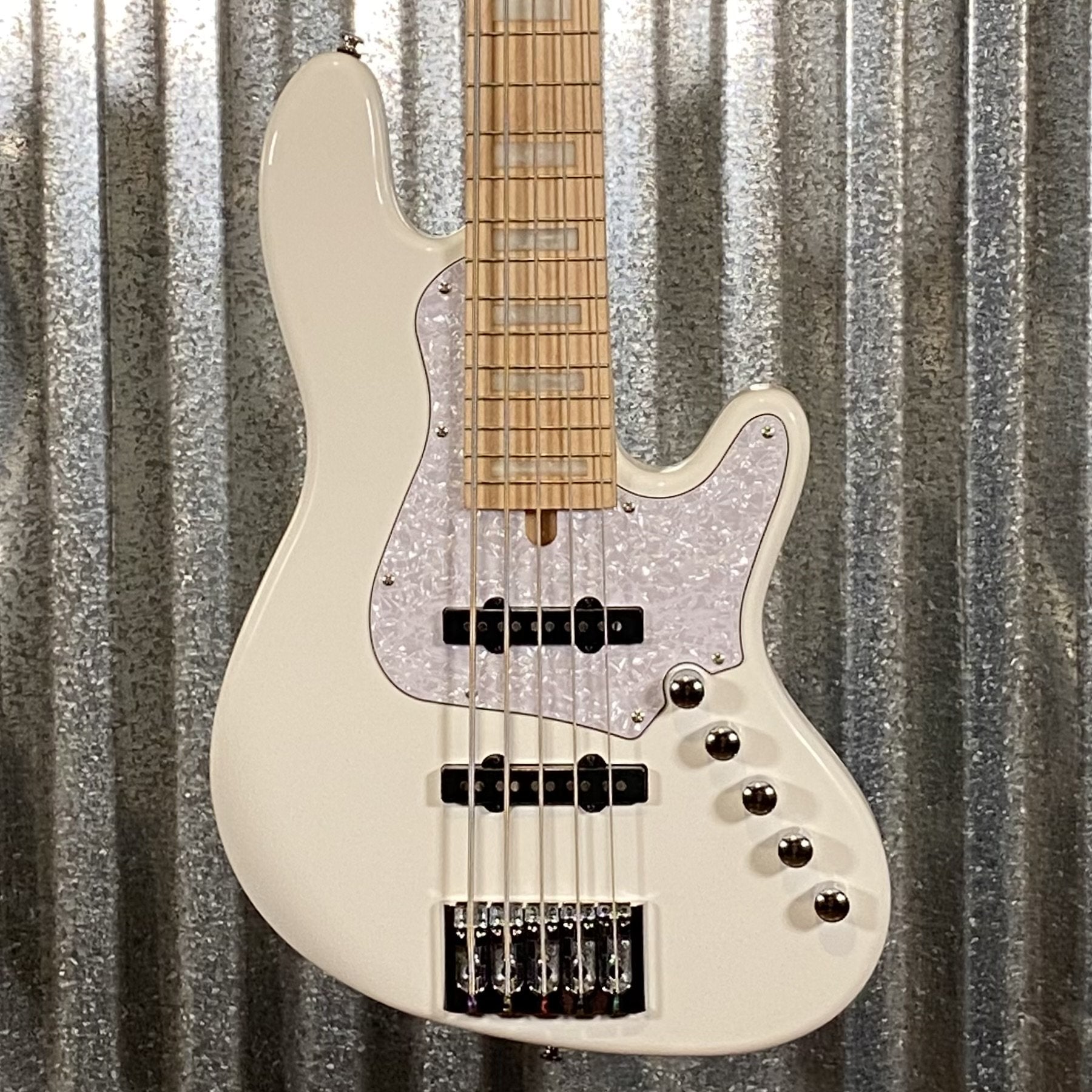
If you want to check specs and price on a specific five-string, you can view the Cort Elrick NJS 5-string listing directly.
Best Bass Guitars Under $500 for Working Players
A $500 ceiling is the hardest budget in bass shopping, because it sits where new instruments stop being disposable and start being gig-viable.
What $500 Buys New Versus Used
Used, the same $500 buys an instrument that originally sold for $800 to $1,200, the single biggest lever in this budget. A well-kept mid-tier bass often has better hardware, a more stable neck, and pickups designed for stage volume. The trade-off is condition risk, which is why the used-market checklist later matters more than any single model recommendation.
The Real Floor for a Gig-Ready New Bass
The lowest-priced bass in our current stock is the used Takamine GB30CE at $749.00. The Ortega STRIPEDSU.ACB, at $799.99, is also an acoustic-electric instrument.
Long-Term Ownership Costs to Budget For
The purchase price is only the first number. A realistic five-year cost picture for an under-$500 bass looks like this:
When to Stretch and When to Wait
If your budget is tight, a used instrument with documented condition is a practical option. Instruments in the catalog are inspected and set up before shipping.
Watch out: Ask any seller to demonstrate truss rod movement in both directions before you commit.
Affordable Bass Guitars for Gigging: What Holds Up on Stage
Stage work punishes instruments in specific ways. Strap balance, tuning stability, and output consistency separate the gig-ready from the bedroom-only.
The Spector Icon NS-5 at $1,299.99 has a fully curved alder body, a bolt-on 3-piece rock maple neck, and Aguilar DCB pickups with an OBP-2 preamp. It also features gold hardware, a fully intonating locking bridge, and a polished brass nut. You can check the Spector Icon NS-5 specs and price on our site.
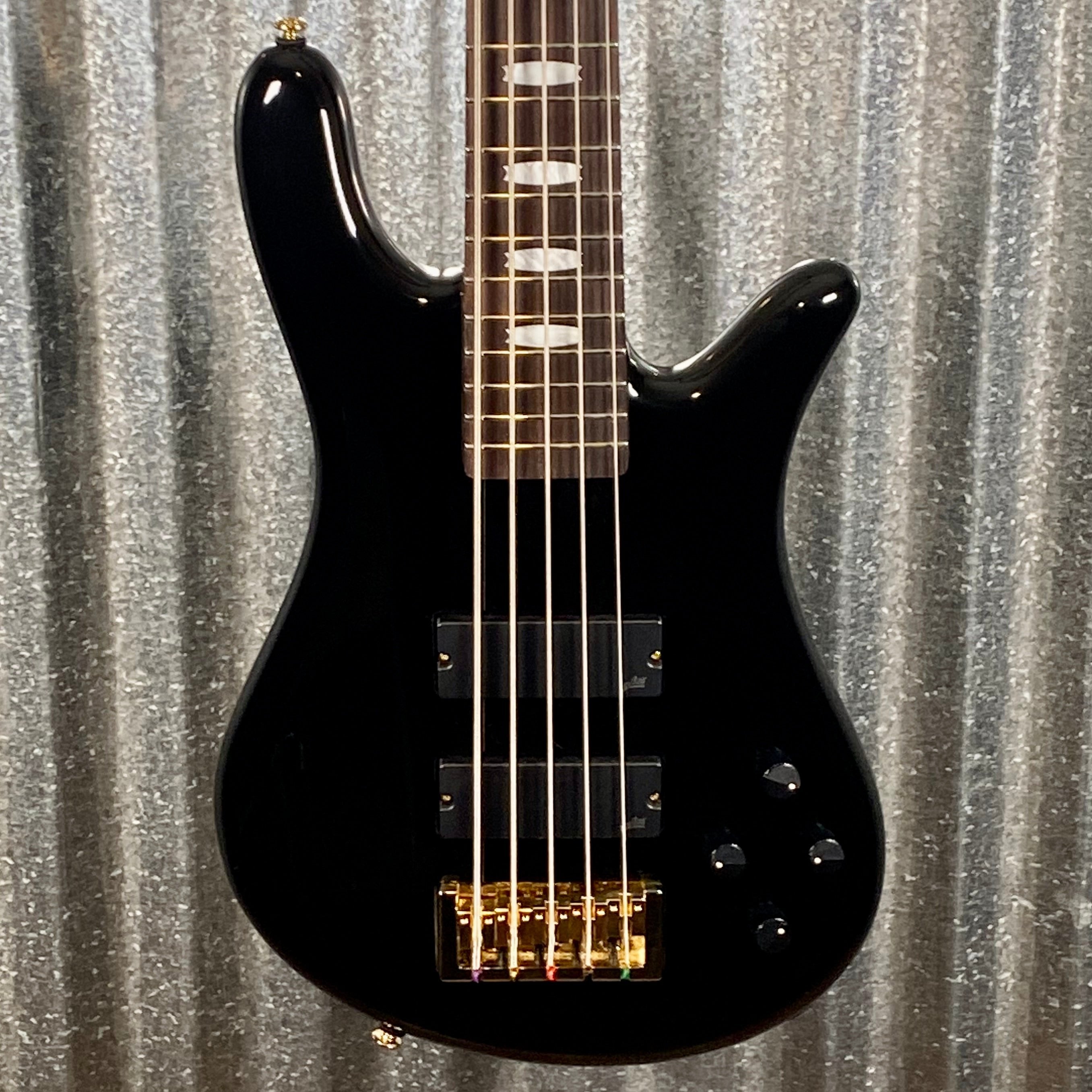
The NJS four-strings feature a heel-less body design with extended treble access and an angled headstock.
The NJS Voiced Tone VTB-ST pickups and the Spector's Aguilar DCB pickups are described in their listings as hum-canceling.
Used Bass Guitars for Sale: Where the Real Value Sits
Used is where affordable professional grade bass guitars actually become affordable. A well-kept instrument loses its depreciation but none of its function, and the specifications that made it professional-grade when it was new do not expire. What changes is the diligence required from the buyer.
Why Used Beats New at the Same Price
At any given price, a used instrument generally sits one or two tiers above what the same money buys new: better hardware, more stable necks, and pickups designed for stage volume. The trade-off is condition risk, manageable if you know what to inspect and what to walk away from.
Condition Grades and What They Mean
Most reputable sellers grade used instruments on a rough scale. The exact labels vary, but the substance is consistent:
- Excellent: Light handling marks, no structural issues, frets show minimal wear, electronics are quiet. Target this grade for a working instrument.
- Very good: Visible cosmetic wear, possibly a small finish chip or two, moderate fret wear in the lower positions, electronics function correctly. Often the best value tier.
- Good: Noticeable cosmetic wear, some fret wear, possibly a replaced part. Playable but likely to need a setup and possibly a fret level soon.
- Fair or player-grade: Structural repairs, significant fret wear, or non-original electronics. Only worth it if the price reflects the work needed.
Ask the seller to state the grade explicitly and to photograph any blemish they mention. A listing that describes wear but does not show it is a listing to skip.
The Inspection Checklist, With Pass and Fail Signals
Run these checks in order, and treat any fail as a reason to negotiate or walk:
- Fret wear. Look at the first five frets under good light. Shallow divots are normal and playable. Deep grooves that catch a fingernail mean a fret level or refret is due, a $100 to $300 cost depending on scope.
- Truss rod movement. Ask the seller to turn the truss rod a quarter turn in each direction. It should move smoothly with modest resistance. A rod already tight in one direction, or that will not move at all, is a fail.
- Electronics noise. Plug in and turn every knob through its full range. Crackle means a cleaning or a repair. A hum that disappears when you touch the strings is usually a grounding issue, not a dead pickup.
- Neck relief and straightness. Sight down the neck from the headstock. A small, even forward bow is normal. A twist, a hump around the 12th to 15th fret, or a back-bowed neck is a fail.
- Bridge and saddle condition. Check that saddles sit flush, intonation screws turn freely, and the bridge is not lifting from the body.
- Tuners. Turn each one. Gritty or loose tuners are a replaceable annoyance, but also a negotiating point.
- Body and neck joint. Look for cracks around the neck pocket, strap button, and control cavity. A hairline finish crack is cosmetic; a crack that moves when you flex the neck is structural.
Refurbished and Open-Box Options
Refurbished instruments sit between new and used: typically customer returns or blemished units inspected and brought back to spec by the manufacturer or a qualified tech.
The Cost Math That Makes Used Work
Resale matters too. Mid-tier used instruments tend to hold a larger share of their value than entry-tier new instruments, so a used purchase at a fair price is often the lower-risk path if you plan to trade up later.
Our Used Listing as a Worked Example
The Takamine GB30CE at $749.00 is a working example of how we describe condition.
If you are new to the used market, our guide to what to look for in used guitars walks through each check in detail before you commit.
Watch out: A seller who will not demonstrate truss rod movement or let you plug in before buying is telling you something. Treat that as a fail and move on.
The Best Bass Guitar for Professional Players on a Budget
Our pick is the Cort Elrick NJS 4 String in White at $999.00.
The listing describes an alder body, 24 frets with a zero fret, and a Bartolini preamp with a push/pull active bypass.
The Black #8042 version is the same instrument at the same $999.00, weighing 8.80 lbs against the White's 8.45 lbs. You can see the Cort Elrick NJS 4-string in white with its full specs and included bag.
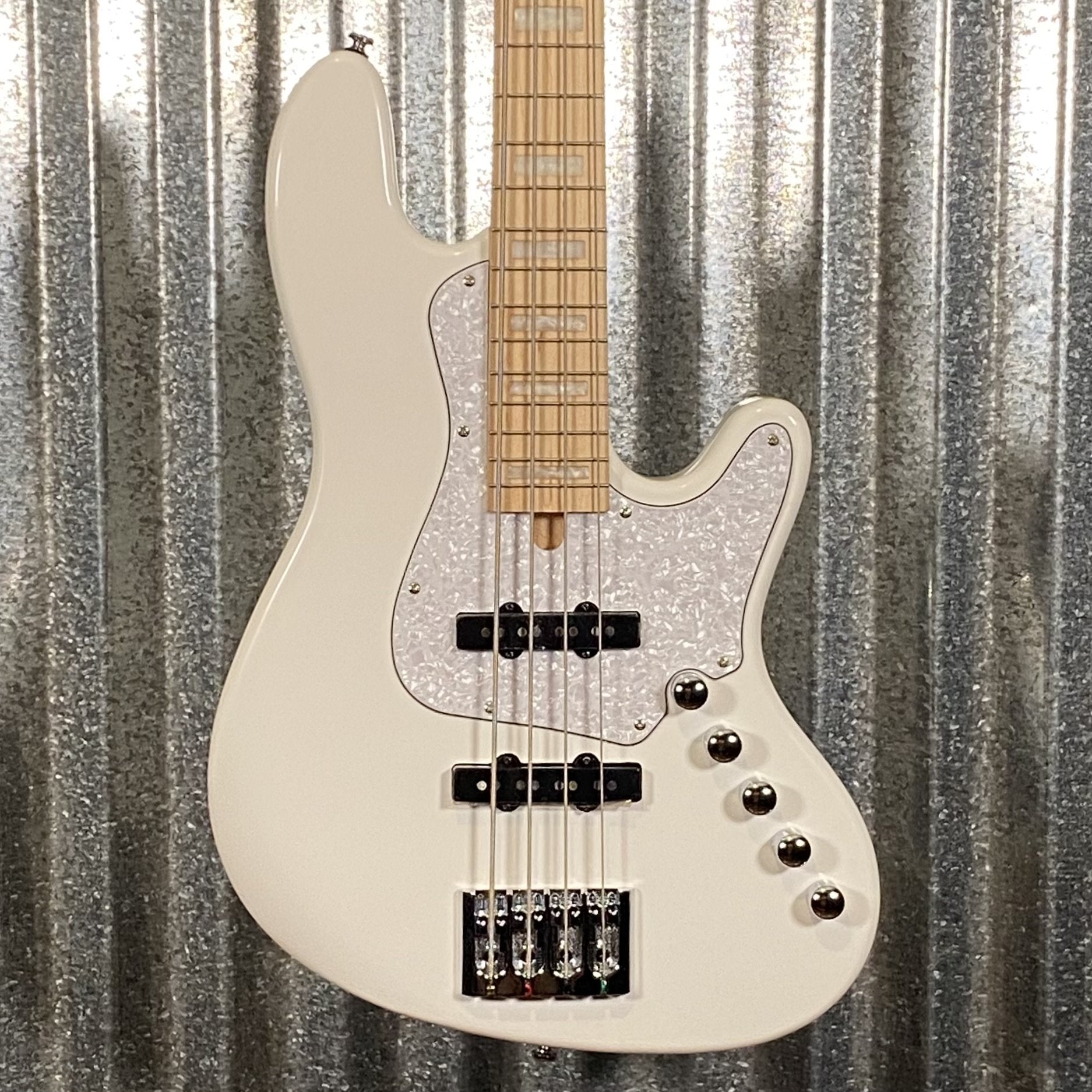
Best for: gigging bassists who want modern J-bass tone with studio-grade electronics. Skip if: you need a five-string or your total budget is under $800.
Setup, Fit, and the Checks to Run Before You Buy
Fit decides more than spec sheets do. A bass that fights your hands will sit in its case no matter how good the pickups are.
Run these checks in order:
- Play every fret from the first to the twelfth. Listen for buzz and dead notes.
- Check the action at the twelfth fret. It should feel low without rattling.
- Play an open string, then the same note at the twelfth fret. If they disagree, intonation needs work.
- Stand with a strap for five minutes. Neck dive shows up fast.
- Test every knob and switch through an amp. Crackle means a cleaning or a repair.
Scale length is the other fit decision. The 34-inch NJS four-strings and the 35-inch five-strings suit most adults. The Ortega's 32-inch scale is the friendlier option for smaller hands.
Every instrument we ship gets a quality check and setup for proper functionality first, and our professional guitar setup guide explains what that process covers if you want to know what to expect.
Shop Inspected Basses at Specialty Traders
Buying a bass online carries one real risk: the instrument arrives in worse shape than the listing suggested.
Pick the scale length and string count that fit how you actually play, then buy the best instrument your budget allows rather than the cheapest one that ships fast.
Get started with Specialty Traders and put an inspected, gig-ready bass in your hands.
The gap between a budget bass and a professional one is smaller than the price difference suggests, as long as you know which four things to check. If you would rather skip the guesswork, our team inspects and sets up every instrument before it leaves the building, and we are glad to talk through scale length, string count, and electronics before you commit.
Frequently Asked Questions
What is the best affordable bass guitar for professional use?
There is no single answer, because professional work spans stage, studio, and pit gigs. Look for stable hardware, quiet electronics, and a neck that stays true under tension. In this guide, the Cort Elrick NJS 4-string at $999 has a Bartolini preamp. The Spector Icon NS-5 at $1,299.99 is a five-string with Aguilar DCB pickups.
Can a budget bass guitar be good enough for gigging?
Yes, if the money went into the parts that fail on stage. Tuning stability, a quiet pickup set, and a solid bridge matter more than a fancy top. Check the tuners, test the electronics at volume, and confirm the neck relief is adjustable. A used Takamine GB30CE acoustic-electric is listed at $749.
Is a used bass guitar a good choice for professional musicians?
Often, yes. Used instruments can offer more value at a given price, but buy where condition is inspected and described.
What should I look for in a professional-grade bass guitar?
Start with the neck: check relief, fret wear, and whether the truss rod still has room to adjust. Then the hardware, including tuners that hold pitch and a bridge with tight saddles. Listen for hum from the pickups and test every control. Confirm the scale length suits your hands, since a 35-inch five-string feels different from a 34-inch four-string. Finally, ask whether the instrument was set up before shipping.
Do professional bass players use affordable instruments?
Plenty do, especially on working gigs where gear gets knocked around. The gap between a cheap bass and a professional one usually comes down to hardware quality, electronics noise, and consistency, not price alone.
