

Last Updated: November 7, 2026
Quick Summary
Buying your first electric guitar starts with matching the instrument to the music you actually want to play, then choosing a versatile model that fits your hands and budget. An HSS-configured guitar like the Cort G200 HSS at $269.00 covers multiple styles, and you should budget for an amp and setup too.
- Write down three bands or songs you want to learn before comparing any guitar models.
- Hard rock and metal lean toward humbuckers, while blues and country favor single-coils.
- The Cort G200 HSS weighs around 7 lbs and has 22 frets and locking tuners.
- Plan $150 to $200 for a 25-watt practice amp alongside the guitar cost.
- Inspect used guitars for a straight neck, level frets, and working pickup selector.
Table of Contents
- Start With Your Goals, Not the Guitar
- What Electric Guitar Should I Buy for Beginners?
- Pickups and Controls: How They Shape Your Tone
- Setting a Realistic First-Year Budget
- What to Check When Buying a Used Electric Guitar
- Beginner Electric Guitar Setup: What to Expect Out of the Box
- Pairing Your Guitar With a Practice Amp
- Choosing Your First Electric Guitar at Specialty Traders
- Frequently Asked Questions
Start With Your Goals, Not the Guitar
The most useful tips for buying your first electric guitar start with a question that has nothing to do with guitars: what do you actually want to play? According to Fender's beginner player guidance, matching an instrument to the music a player loves is the strongest predictor of whether they stick with it.
So before you compare a single model, write down three bands or songs you want to learn first. That list decides everything else: pickup type, body shape, and budget.
Match the Guitar to the Music You Actually Play
Hard rock and metal lean toward humbuckers for a thicker, heavier voice. Blues, country, and indie favor single-coils for bite and clarity. Pop and function-band work usually calls for a versatile HSS configuration that covers both. A beginner who wants to practice anywhere, including on trips, might consider a compact option like the Hofner Shorty travel guitar, while someone who mostly plays at home should prioritize tone and comfort over portability.
What Electric Guitar Should I Buy for Beginners?
A versatile, well-built model is a sound choice for most beginners. An HSS-configured guitar pairs two single-coils with a bridge humbucker and covers a range of styles. Our pick for this role is the Cort G200 HSS at $269.00, available in Pastel Pink and Sky Blue.

Best for: beginners who want one guitar that handles multiple styles. Skip if: you already know you want a single-coil-only sound.
Body Size, Weight, and Comfort
Comfort decides how long you practice. The G200 weighs around 7 lbs. Sit with the guitar on your right leg, check that the body doesn't dig into your ribs, and confirm the neck sits at a natural angle. A proper strap makes a real difference here; a padded cotton strap like the Levy's MSSC80 distributes weight across the shoulder instead of the neck.
Neck Shape, Frets, and Playability
Playability is how easily a guitar lets your hands do what you intend. Neck profile, fret size, and string action all feed into it. The G200 uses a 9.45-inch fretboard radius and a 1 21/32-inch nut width. Wrap your hand around the neck: your thumb should rest comfortably, and your fingers should reach the low E string without strain. If the action feels high or the strings fight back, ask for a setup before you buy.
Pickups and Controls: How They Shape Your Tone
Pickups convert string vibration into electrical signal, and they define your guitar's basic voice. A single-coil pickup produces a bright, articulate sound with some hum. A humbucker cancels that hum and delivers a fatter, louder tone.
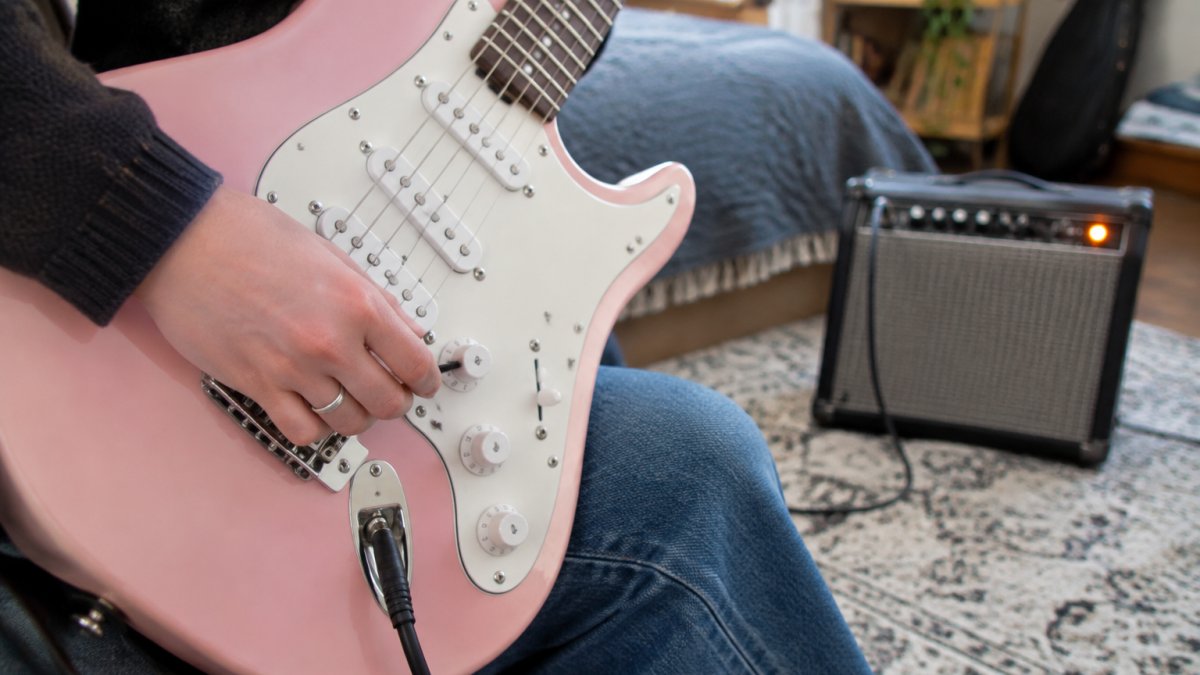
The controls are simpler than they look. If you're weighing whether extra pedals are worth it early on, our breakdown of budget guitar pedals and whether they're worth buying covers that decision.
Setting a Realistic First-Year Budget
Plan for the guitar, the amp, and a setup, not just the guitar. Buying a $119 used guitar and skipping the amp leaves you with an instrument you can't hear properly.
Here's how the money breaks down:
| Item | Typical Cost | Notes |
|---|---|---|
| Electric guitar | $119 - $269 | New or inspected used |
| Practice amp | $150 - $200 | 25-watt combo is plenty |
| Setup and strings | $50 - $80 | Often included with inspected gear |
| Cable, strap, picks | $30 - $50 | Buy once, buy decent |
Typical Cost
Watch out: a "deal" that saves $80 on the guitar but needs $120 of fretwork is not a deal. Ask what inspection and setup are included before you compare prices.
What to Check When Buying a Used Electric Guitar
Used guitars offer the best value for beginners, provided you inspect properly. Used instruments can offer good value for beginners when they are inspected. Our used listings, like the Silvertone SS11 at $119.00, describe the instrument's condition.

A Step-by-Step In-Store Inspection Checklist
Run this list in order, whether you're in a shop or unboxing a delivery:
- Sight down the neck from the headstock: it should be straight or nearly so, with no twist
- Run a finger along each fret edge: no sharp ends, no deep divots under the strings
- Play every fret on the high E and low E strings: no buzzing, no dead notes
- Test the pickup selector through all five positions: no crackle, no dropouts
If you're buying used and want to protect the instrument, a hardshell case like the Gator GWE wide-body electric case is worth budgeting for.
Buying a Used Guitar Online: Returns, Shipping, and Warranty
Buying remotely adds three risks you can't inspect in person: condition surprises, shipping damage, and warranty gaps. Treat the listing as a starting point, not a guarantee, and confirm these terms before you pay:
- Return window and who pays return shipping. A common pattern is a 7- to 30-day return window, but the buyer often covers return freight unless the item arrived damaged or not as described. Ask for the policy in writing and note the exact deadline.
- Shipping damage protocol. Ask the seller to ship in a case or double-boxed carton with the strings detuned slightly and the neck supported. When the box arrives, photograph it before opening, then inspect the guitar within the return window. If the headstock or neck pocket is cracked, stop and file a claim immediately rather than attempting a repair.
- Warranty coverage. Most used instruments are sold as-is or with a short shop warranty rather than the manufacturer's original warranty, which typically does not transfer. Confirm whether the seller offers any functional guarantee and for how long.
- Condition disclosures. Look for close-up photos of the frets, nut, bridge, and neck pocket, and ask for the serial number and a photo of the back of the headstock. A seller who won't provide these is a risk.
Beginner Electric Guitar Setup: What to Expect Out of the Box
A new guitar rarely plays its best straight from the box. Beginner electric guitar setup covers truss rod adjustment, string height, intonation, and pickup height, and most factory instruments ship with action set conservatively high. At Specialty Traders, every instrument and amplifier goes through a quality check for proper functionality before it ships.
What a Setup Actually Changes
A setup is a sequence of adjustments, and knowing what each one does helps you decide whether to pay for it:
- Truss rod adjustment controls neck relief, the slight forward bow that gives strings room to vibrate. Too little relief causes buzzing in the lower frets; too much raises the action and makes chording harder.
- String height (action) is set at the bridge and nut. Lower action is easier on beginner fingers but can buzz if set too low; higher action is cleaner but harder to play.
- Intonation adjusts the bridge saddles so the guitar stays in tune as you move up the neck. If chords sound sour above the 12th fret even when the open strings are in tune, intonation is off.
- Pickup height affects output and tone (Seymour Duncan Pickup Height). Pickups set too close can pull the strings and sound harsh; too far away sounds weak.
How to Tell If You Need a Professional Setup
Pay for a professional setup if the action feels high, notes go sharp above the 12th fret, or the guitar buzzes. A tech can also lower the action for easier chording, which matters most in your first six months. A simple self-test: tune the guitar, play a chord at the 3rd fret and the same chord at the 12th fret, and listen for sourness; then fret each string at the 12th fret and compare the pitch to the 12th-fret harmonic.
What to Ask a Technician
When you drop off a guitar, ask what the setup includes, whether strings are extra, and what the turnaround time is. A basic setup typically covers truss rod, action, and intonation adjustments.
Watch out: a setup on a guitar with worn frets or a twisted neck won't fix the underlying problem, so have the instrument inspected before paying for adjustments that can't hold.
Pairing Your Guitar With a Practice Amp
A practice amp is half your sound, and skipping it is the most common beginner mistake. The Boss Katana-25 at $199.99 offers six amp characters, over 60 onboard effects, selectable power control, and a built-in tuner.

A simpler tube option exists for players who prefer a pure, responsive feel: the VHT Special 6 tube amp head is available on our site as an open-box unit.
Choosing Your First Electric Guitar at Specialty Traders
The throughline of every good first purchase is fit: the guitar matches your music, your hands, and your budget, and someone checks it before it reaches you.
We're a family-owned shop with more than 25 years in the retail music industry, and we inspect every instrument and amplifier before it ships, with free US shipping on most items.
A first guitar should feel like an invitation, not a puzzle.
Frequently Asked Questions
How much should a beginner spend on a first electric guitar?
Most beginners can get a solid, playable first electric guitar for $119 to $269. A used S-style model like the Silvertone SS11 or Jay Turser JT-100 runs about $119, while a new Cort G200 HSS is $269. Add a practice amp such as the Boss Katana-25 at $199.99. Spending more does not guarantee a better start; a properly set up budget guitar beats a poorly adjusted expensive one every time.
Should a beginner buy a guitar and amplifier together?
Buying a guitar and amp together usually saves money and hassle, because you can test the exact pairing before you commit. A practice amp in the 20 to 25 watt range, like the Boss Katana-25, gives you clean and distorted tones plus built-in effects for home use. If you buy online, ask whether the seller can confirm the guitar was checked through an amp before shipping.
Is it better to buy a new or used electric guitar?
Used guitars stretch your budget further and often hold value better, but condition matters more than age. Check the fretwork for deep grooves, test every pickup and switch, and look for cracks around the neck pocket. A used guitar from a seller who inspects instruments before shipping reduces much of the risk that comes with buying used gear online.
What guitar features matter most for a beginner?
Comfort and playability come first: a body weight around 7 pounds, a neck that fits your hand, and action low enough to fret notes without strain. After that, an HSS pickup configuration covers the widest range of styles, from clean single-coil rhythm to humbucker leads. Locking tuners and a stable bridge help tuning stability, which matters more for daily practice than premium wood or finish.
Do I need a professional setup after buying my first electric guitar?
Often yes, even on a new guitar. A setup adjusts action, intonation, and truss rod relief so the instrument plays in tune and feels comfortable. Some sellers, including Specialty Traders, inspect instruments before shipping. If the action feels high or notes go sharp up the neck after a few weeks, a professional adjustment is worth the modest cost.
What is the 80/20 rule in guitar?
The idea is that roughly 80 percent of your progress comes from 20 percent of your effort, mainly consistent practice on fundamentals like chords, timing, and clean fretting. Applied to buying, it means focus your budget on the 20 percent of features that affect playability and tone, such as neck feel and pickup configuration, rather than cosmetic extras that do not change how the guitar plays.
